


Choose Your Certification Package
Start by selecting a package that includes the required state certification for individuals or training credits for businesses, with the flexibility to add career enhancement electives as needed.

Complete Checkout
Complete checkout in seconds. Your account instantly shows your available certification and career enhancement elective credits.

Redeem Your Credits & Start Training
Begin your state-required certification immediately.Use your career enhancement elective credits anytime to choose the specialty courses that help you qualify for better-paying posts.

Complete the Course and Take the Test:
Once the course is completed, the officer will take the official state test. Our comprehensive, 100% online and self-paced curriculum is designed to thoroughly prepare you, ensuring you have the knowledge and confidence needed to pass and move forward in your security career.
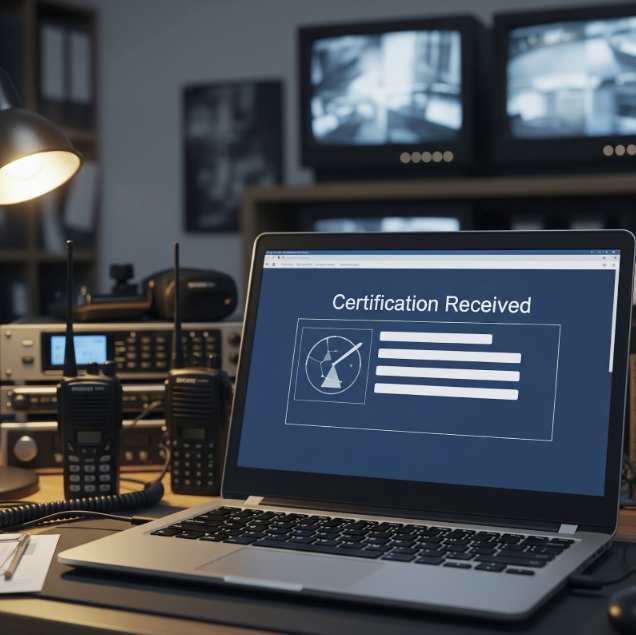
Receive the Certificate:
After passing the state test, officers receive an electronic certificate. Certification varies by state: Arizona requires an instructor's signature on the application; California, a BSIS-approved certificate; Georgia, a BPDSA-approved certificate; and Minnesota, Utah, and Texas, their respective state-approved certificates (Texas's is vital for a Level II Non-Commissioned License).
Apply for Security Guard Positions
With the certificate in hand, the officer can confidently apply for security guard positions. This official documentation demonstrates their qualification and dedication to potential employers, opening doors to various security job opportunities and helping them secure a role where they can continue to grow and earn more.
Get Started. Choose Your Path!
Whether you are starting a new career, renewing a license, or managing a security team, we have the right training solution for you. Select your goal to get started.
For Individual Security Guards
Get certified fast, add in-demand skills, and position yourself for higher-paying posts, all in one place.
Train on your schedule with state-approved courses built by working guards who know what employers look for.
For Security Companies
Train, track, and certify your entire team with one centralized system.
Stay compliant across locations, streamline onboarding, and maintain clear records for audits and renewals.
FREQUENTLY ASKED QUESTIONS
Get Started
What skills do security guards need?
Security guards require a diverse set of skills to effectively perform their duties and ensure the safety and security of people and property. Here are some essential skills for security guards:
1. Observation Skills: Security guards must be vigilant and observant, constantly scanning their surroundings for any signs of suspicious activity or potential threats.
2. Communication Skills: Effective communication is crucial for security guards to interact with coworkers, clients, and the public. They should be able to communicate clearly and professionally both verbally and in writing.
3. Conflict Resolution: Security guards may encounter conflicts or confrontations in the course of their duties. Having strong conflict resolution skills can help them de-escalate tense situations and resolve disputes peacefully.
4. Physical Fitness and Stamina: Depending on the assignment, security guards may need to stand or patrol for long periods and may need to respond quickly to emergencies. Good physical fitness and stamina are important for performing these tasks effectively.
5. Emergency Response: Security guards should be trained in emergency response procedures, including how to respond to fires, medical emergencies, and other crises. They should remain calm under pressure and take appropriate action to mitigate risks and protect people and property.
6. Security Technology Proficiency: Many security operations rely on technology such as surveillance cameras, access control systems, and alarm systems. Security guards should be familiar with using and troubleshooting these technologies.
7. Attention to Detail: Security guards must pay close attention to detail to detect and report any security breaches, safety hazards, or policy violations. Small details can often provide important clues or indicators of potential threats.
8. Ethical Conduct: Security guards are entrusted with the safety and security of others, so they must adhere to high ethical standards. This includes maintaining confidentiality, respecting the rights of individuals, and following legal and company policies.
9. Teamwork: Security guards often work as part of a team, collaborating with coworkers, law enforcement, and other stakeholders to maintain security. Being able to work effectively with others is essential for achieving common security objectives.
10. Crisis Management: In the event of a security breach or crisis situation, security guards may need to take decisive action to protect people and property. Training in crisis management and decision-making can help them respond effectively in high-pressure situations.
These are just a few examples of the skills that security guards need to excel in their roles. Depending on the specific requirements of their assignments, security guards may need additional skills or specialized training.
What do security guards do?
Security guards enforce rules on a property, and deter criminal activity, either by walking the facility and grounds to conduct security checks, or monitoring surveillance cameras and alarms. The core responsibilities of any officer are OBSERVE and REPORT.
Is the security guard course hard?
No, basic things you learned in school and common sense. Not all basic security is common sense. There is a 6-hour course that is required to take in Texas. The exam is not hard, if you pay attention in class and take note.
How can a security guard identify potential security threats?
By being observant, understanding normal versus abnormal behaviors, and staying informed about current security threats.
What is the importance of a security guard’s patrol?
Providing directions, helping with inquiries, and ensuring a safe environment all contribute to positive customer experiences. Similar to an information center.
How does customer service relate to a security guard’s duties?
Regular patrols help deter crime, ensure safety, and identify security risks or breaches.
What questions are asked in a security interview?
In a security interview, hiring managers typically ask a range of questions to assess candidates' qualifications,
experience, and suitability for the security guard position. Here are some common questions you might encounter in a security interview:
1. Tell me about your previous experience in security or related fields.
2. What motivated you to pursue a career in security?
3. How do you stay vigilant and alert during long shifts?
4. Describe a time when you had to handle a difficult or confrontational situation. How did you handle it?
5. What procedures do you follow to ensure the safety and security of the premises you are guarding?
6. How do you prioritize tasks when dealing with multiple security issues simultaneously?
7. Can you describe a time when you noticed a security vulnerability and took proactive steps to address it?
8. What would you do if you witnessed a coworker or colleague violating security protocols?
9. How do you handle interactions with the public, especially in sensitive or potentially confrontational situations?
10. What techniques do you use to de-escalate conflicts or diffuse tense situations?
11. Are you comfortable working alone or as part of a team? Can you give examples?
12. How do you ensure compliance with company policies and regulations while on duty?
13. Can you describe your experience with using security equipment such as CCTV cameras, access control systems, or alarm systems?
14. What do you think are the most important qualities for a security guard to possess?
15. How do you handle high-stress situations or emergencies? Can you provide examples?
These questions are designed to evaluate your knowledge, experience, problem-solving skills, communication abilities, and suitability for the security guard role. Be prepared to provide specific examples from your past experiences to illustrate your skills and capabilities. Additionally, demonstrate your understanding of security protocols, procedures, and best practices during the interview.